

English translation provided for reference. Original images are retained in their source language.
core ideas
1. The historical background and core challenges of the development of the incubator industry current global Technological innovation Entering a new round of acceleration period, hard technology entrepreneurship is characterized by high technical thresholds, long R&D cycles, and large capital requirements, which poses severe challenges to the traditional incubation model. China incubator After more than thirty years of development, the industry has formed a coexistence of government-led, enterprise-led and market-driven structures. However, it generally faces three core dilemmas: the "dare not to invest" phenomenon caused by conservative fund investment decisions, the "reluctance to invest" caused by the long investment return cycle, and the "post-investment loss of control" problem caused by the superposition of technical risks and market risks. The root cause of these difficulties lies in the systemic deficiencies of traditional incubators in the four dimensions of project screening, acceleration services, capital tools, and ecological construction. Y Combinator (YC) in the United States and China Achievement and Creation The successful practice provides a replicable paradigm for solving these industry problems. The "standardization acceleration + ecological empowerment" model established by YC through twenty years of exploration has accumulated a total valuation of incubated companies exceeding US$800 billion. On the basis of inheriting YC's methodology and combining the characteristics of China's hard technology development, Qiji Chuangtan has innovated a localization path of "thematic investment + industrial chain collaboration". The density of investment in 31 companies in a single quarter in 2025 has verified the effectiveness of its model. The experience of these two benchmark institutions shows that modern incubators must evolve from physical space providers to technology commercialization operating systems. Their core capabilities are reflected in the foresight of technological insights, the scientific nature of acceleration mechanisms, the innovation of capital tools, and the synergy of ecological networks. “Invest first, then accelerate” 2. Construction of technical insight system: from empirical judgment to data-driven paradigm upgrade YC has built a unique founder identification system through an acceptance rate of 1.5% and a 10-minute pressure interview. Its core is to capture the difficult-to-quantify trait of "extreme execution power." Qiji Chuangtan has developed a "technology-market" two-dimensional evaluation model that is more suitable for hard technology entrepreneurship. Among the 57 projects displayed on the 2025 spring roadshow day, AI Agent-related companies accounted for 49%. This precise layout stems from the prediction of the "Agentic Workflow" technical route by its technical expert committee. Together, the two organizations reveal how modern incubators must be built technical radar system, this system needs to integrate three key modules: the technology maturity monitoring module tracks global laboratory results and patent developments in real time, the industrial demand mapping module forms a technical demand list through scenario disassembly, and the cross-validation module organizes scientists, engineers and industry experts to conduct multi-dimensional assessments. This data-driven decision-making system can reduce the technical misjudgment rate by more than 60%, effectively solving the problem of "fear not to invest".Chinese incubators need to particularly strengthen the role of industry experts in the review process and reversely verify technical feasibility through real-life scenario requirements. For example, intelligent document parsing technology must prove its actual effectiveness in financial contract review scenarios. This verification mechanism can significantly reduce the technical risks of early investment. 3. Acceleration engine:Establish a two-wheel drive coupling stress testing and policy YC's "three-month curse" and Qiji Chuangtan's "road show forcing mechanism" jointly build a structured acceleration paradigm. This high-intensity verification process can significantly reduce the market risk of the project. YC requires the team to launch MVP in the first week and implement "data tyranny" by tracking user growth rate every week; Qiji Chuangtan uses order fulfillment rate to measure hard technology projects. For example, the zero-code system of Dianziyang Technology was piloted by 5 factories during the incubation period. The underlying logic of this mechanism is "stress testing to catalyze innovation density", but Chinese incubators need to superimpose localized modules to hedge policy and market risks: First,policy sandbox, to help the team deal with data security review (such as AI training data compliance), technology export control (such as chip architecture authorization), such as the collaboration between Zhongke Tiansuan space supercomputer and the national star network plan; the second is scene penetration, anchoring "high-speed rail inspection" and "port AG" V" and other specific scenarios to avoid technological suspension. Jiutian Ruixin (sensor-memory-calculation integrated chip) invested by Qiji Chuangtan in Q3 of 2025 and Qingyu robotic arm (flexible grasping) formed an industrial chain synergy, verifying the multiplier effect of the "technology cluster" incubation strategy. For the dilemma of “funds are afraid to invest”, incubators can work with local governments to set up “Proof of Concept Fund"Replacing part of the cash investment with a purchase commitment, such as a local government's commitment to purchase robot products recommended by an incubator, transforms market risks into controllable trial and error costs. 4. Capital tool innovation:From single equity investments to risk-stratified composite toolkits YC's SAFE agreement (US$125,000 in exchange for 7% equity + 375,000 uncapped follow-up investment) is essentially a "risk pricing option" that postpones the valuation game to the product verification stage; Qiji Chuangtan adopts a "basic investment + industrial resource package" model. This reveals that the capital tools of hard technology incubators must go beyond the monetary dimension to allocate risks: technology discount shares (using the right to use test equipment to deduct the investment amount), proof-of-concept funds (jointly building pilot platforms with local governments), order betting agreements (replacing part of the cash with purchase commitments) and other composite consideration mechanisms can effectively reduce trial and error costs. To address the problem of "post-investment risk out of control", you can learn from the experience of YC's Continuity Fund to set up a "risk buffer pool" and extract a certain percentage of the proceeds from successful incubation projects to compensate for failed projects; or design a "milestone capital injection" clause to release investment funds in stages and link them to technical indicators. Use such tools to innovate and break the "laboratory-market" death valley. For example, an incubator requires invested companies to complete a technology node before they can receive the next funding, cutting risks into manageable fragments. 5. Ecological Construction: From Alumni Network to Risk Dispersion System of “Triple Helix” Community 6. Future Form: The Ultimate Balance between Distributed Innovation Infrastructure and Risk Management By 2030, top incubators will evolve into "technology commercialization operating systems": predictive incubation engines scan global technological breakthroughs in real time, transnational technology grafting networks match the needs of emerging market scenarios, and talent-capital-policy intelligent matching platforms achieve precise coupling of innovation elements. The deep integration of YC's global experience and Qiji Chuangtan's industrial chain will give birth to a new generation of incubation paradigm - not only business cultivators, but also risk managers of technology strategies. When young entrepreneurs demonstrated the "Emotional Base Robot" on Demo Day, the incubator had already decomposed the original risk into bearable modules through pre-stage technical assessment, scenario verification, capital tools and ecological collaboration. During this process, the ultimate mission of the incubator has become increasingly clear: to become a producer of innovation density and a hub for risk transformation, allowing technological breakthroughs and industrial needs to release exponential energy in a controlled collision.Changshu Research Institute of Southwest University It is believed that for Chinese incubators, only by integrating Silicon Valley’s methodology, China’s industrial chain depth, and global technology vision can we build a hard technology incubation ecosystem that both stimulates innovation and manages risks.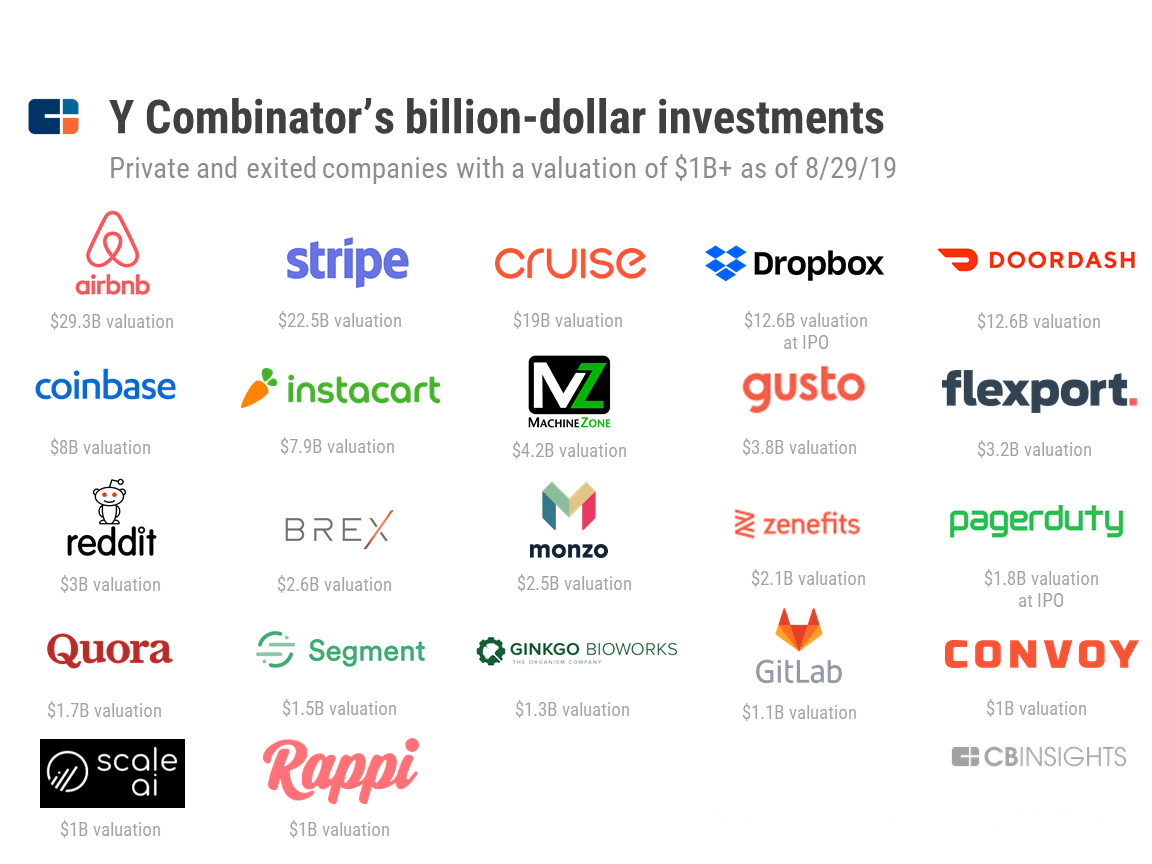
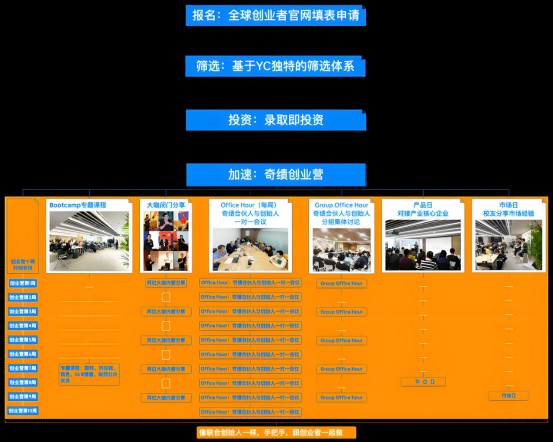
Through the self-reinforcing ecological network built by 5,000 alumni companies, YC has created classic cooperation cases such as Stripe and Shopify. Qiji Chuangtan has established a "scientist-entrepreneur-government" triple helix system with more Chinese characteristics, achieving efficient transformation of academic resources, and the industrial chain collaboration platform has promoted upstream and downstream cooperation. Modern incubators need to create four levels of ecological support: the technology transformation layer solves the last-mile problem from the laboratory to the production line through the "scientist part-time CTO" mechanism; the market access layer relies on industry leading companies to establish priority procurement channels; the capital circulation layer builds a complete chain from angel investment to M&A exit; and the policy coupling layer promotes the docking of projects with major national projects. This ecosystem can produce a risk diversification effect. When an intelligent driving project obtains order commitments from OEMs, technical risks and market risks are simultaneously reduced. The incubator should also establish a technology reuse platform for alumni enterprises, so that the technology accumulation of failed projects can be reborn in new scenarios. This "Technology asset securitization” Mechanism can improve the overall return on investment
Source: Guoke Torch Business Incubator Research Center